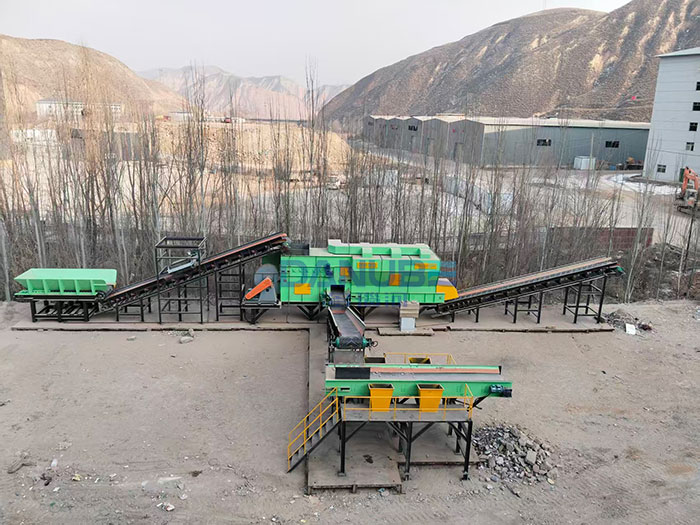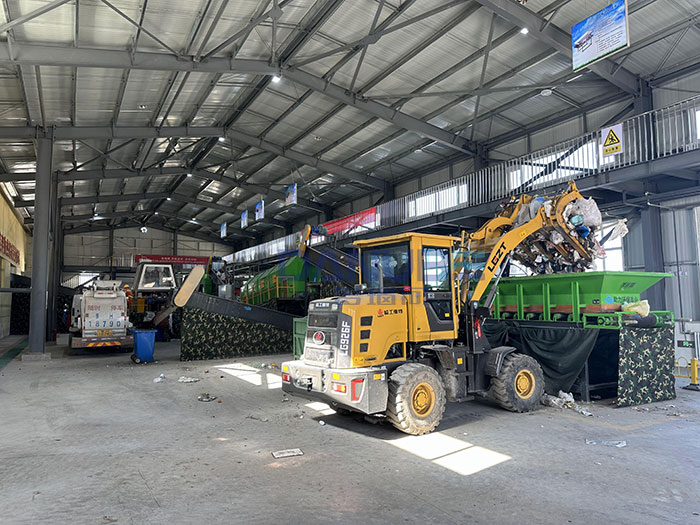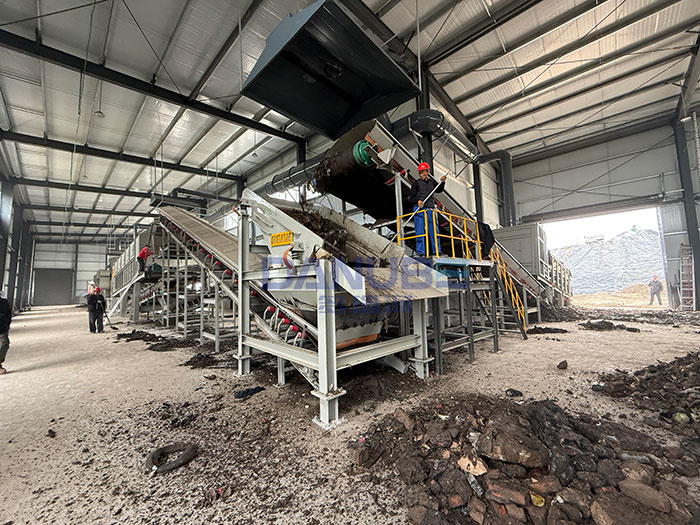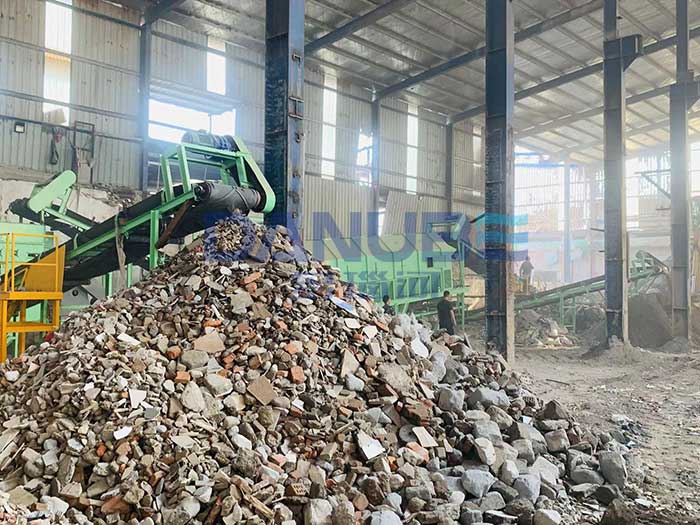
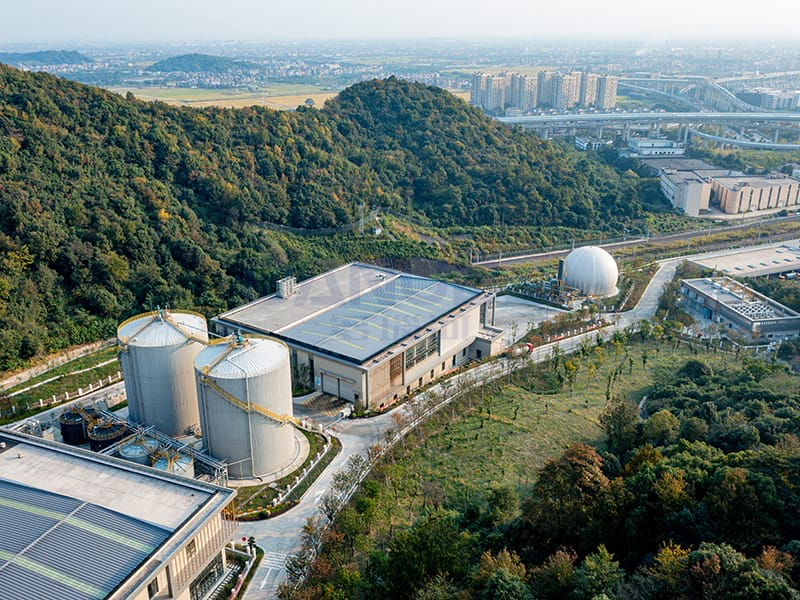
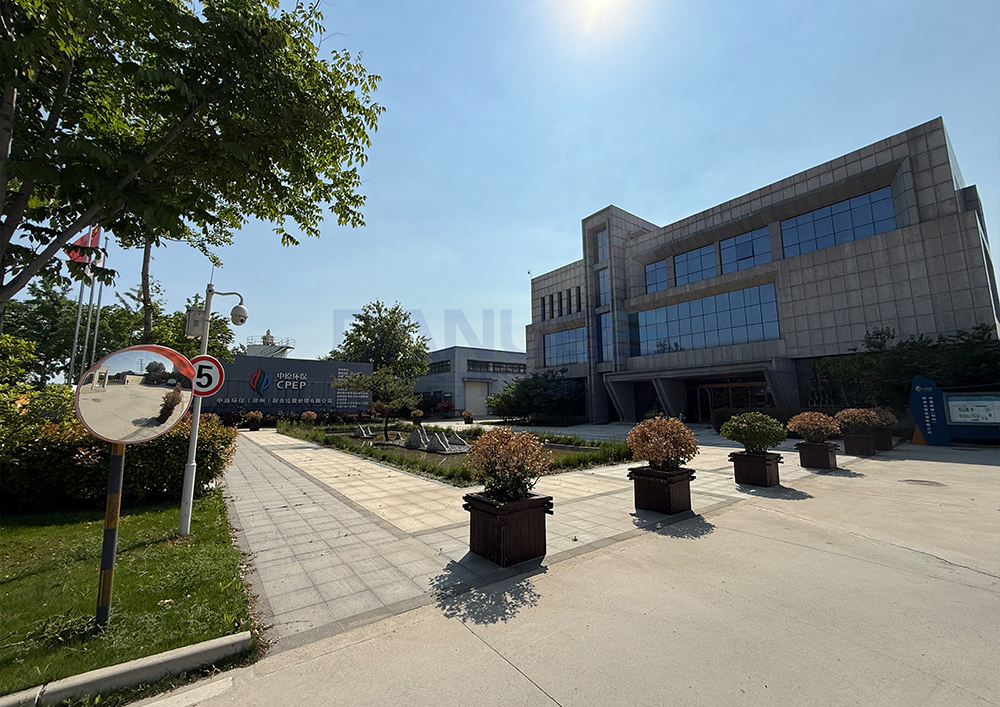
Our integrated food waste treatment system adopts mature dry anaerobic digestion technology, focusing on harmless disposal, volume reduction and full resource recycling. The system is designed for municipal kitchen waste, catering waste, food processing residues and other organic solid waste, realizing closed-loop treatment of “waste-to-energy, waste-to-fertilizer and waste-to-grease”. With fully enclosed operation and intelligent automatic control, the system achieves zero secondary pollution, low operation cost and high economic benefit, providing reliable and low-carbon solutions for zero-waste city construction.
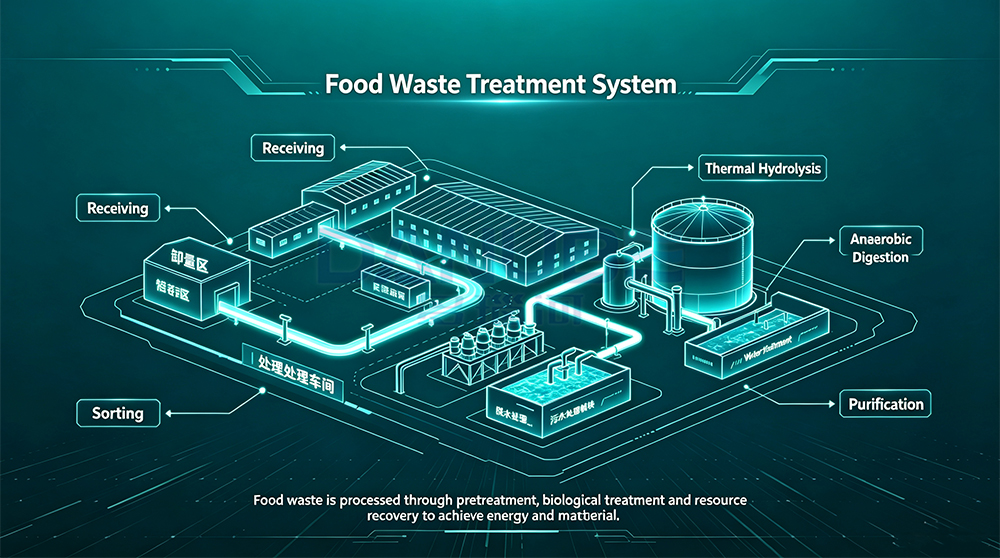
Process Flow
1. Waste Receiving & Pretreatment
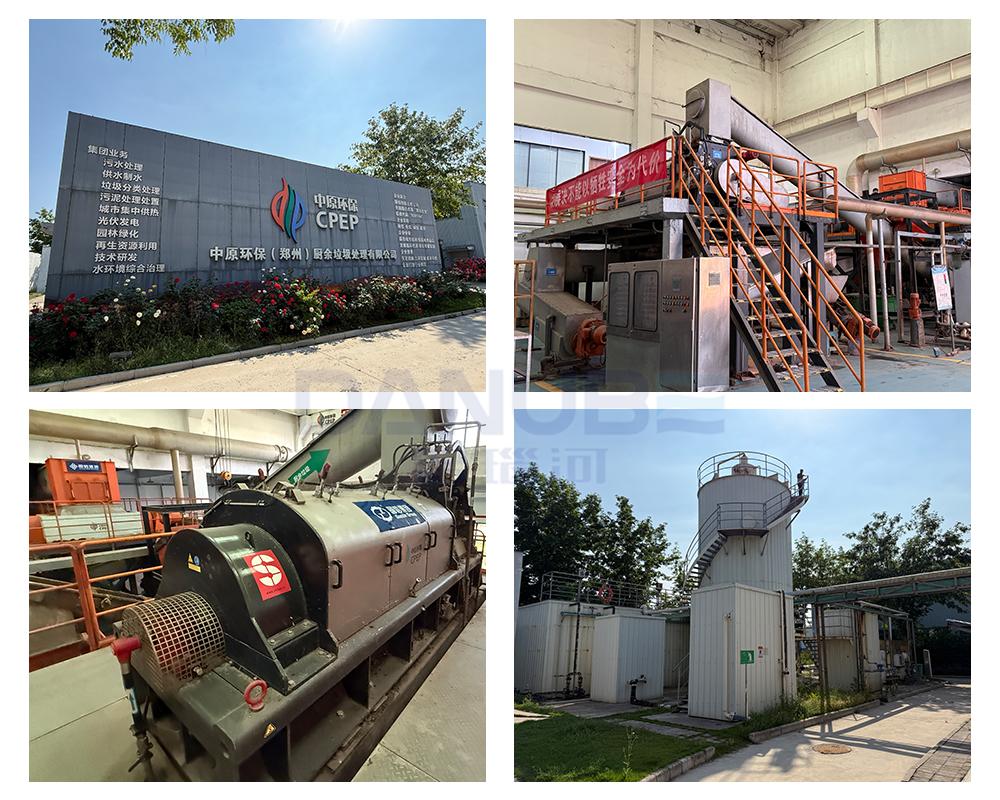
Food waste is fully enclosed and discharged into the workshop. Through multi-stage shredding, drum screening, sand removal and light impurity separation, rigid impurities such as plastic, metal, wood and stone are completely removed. After thermal hydrolysis pulping and homogenization, the organic slurry reaches stable fermentation conditions. The three-phase centrifugal separation unit efficiently extracts crude grease, which can be used as high-quality raw material for biodiesel production.
2. Dry Anaerobic Digestion
The pretreated organic slurry is pumped into sealed anaerobic digesters for mesophilic constant-temperature fermentation. Microorganisms decompose organic matter stably and continuously produce biogas. The double-membrane gas storage tank balances biogas output pressure. After desulfurization and dehydration purification, biogas reaches high-quality energy standards for subsequent comprehensive utilization. Compared with traditional wet anaerobic technology, dry anaerobic process features smaller floor area, less digestate liquid output and higher biogas yield.
3. Biogas Comprehensive Utilization
Purified biogas is supplied to CHP units for power and heat generation to support factory production and daily operation. Excess biogas can be upgraded to biomethane for urban pipeline supply or vehicle fuel. Equipped with emergency flare system, it ensures safe exhaust during equipment maintenance and peak load operation, avoiding unorganized gas emission and achieving environmentally friendly and stable energy output.
4. Digestate & Wastewater Recycling
Fermented digestate is dewatered and pressed. The solid residue is composted and processed into organic fertilizer and nutrient soil for agricultural and landscape use. The separated liquid enters the advanced wastewater treatment system. After biochemical and membrane treatment, the effluent reaches reuse standard and is fully recycled for factory production and greening, realizing zero discharge of production wastewater.
Core Advantages
– High-efficiency Pretreatment: Multi-stage precise sorting technology ensures high impurity removal rate and low organic loss, adapting to complex and mixed domestic food waste.
– Low-carbon Dry Anaerobic Technology: Reduce land occupation by 30%, reduce digestate liquid by 60%, and increase biogas yield by 20%, effectively lowering overall operation cost.
– Full-closed & Environment-friendly Operation: The whole process is fully sealed with centralized odor collection and treatment, no odor leakage and no secondary pollution.
– Multiple Resource Benefits: Realize triple output of crude grease, clean biogas energy and organic fertilizer, forming a profitable circular economy model.
– Intelligent Automatic Operation: Equipped with IoT remote monitoring system to realize real-time data collection, automatic early warning and unattended stable operation.
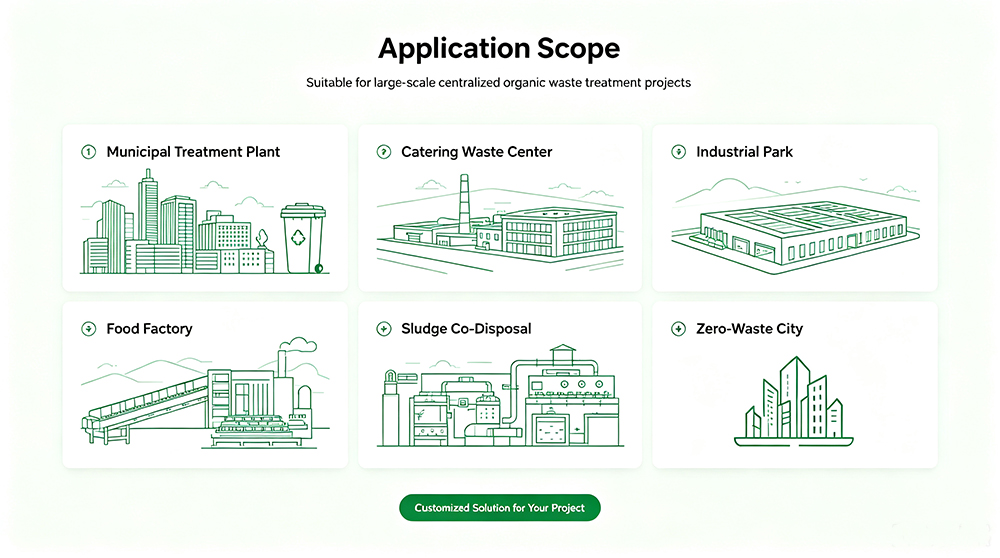
Application Scope
Municipal food waste treatment plants, district-level catering waste disposal centers, industrial park organic waste treatment stations, food factory residue treatment projects, and municipal sludge co-disposal projects. Suitable for large-scale centralized treatment projects with daily processing capacity from 50 tons to 500 tons and above.
Service Solution
We provide one-stop customized services including project scheme design, process optimization, complete equipment supply, EPC general contracting and long-term operation management. According to different site conditions, waste characteristics and project demands, we tailor the most economical and efficient food waste resource recycling system for clients.
tel:0086 17596531123
email:danube@lantianmachine.com
address:No. 9 Yulian Industrial Cluster, Gongyi, Zhengzhou, Henan Province China

If you are interested in our products, Please enter the keyword you want to search

 EN | CN